PRP Hair Treatment in Hertfordshire & Norfolk
We all know that hair thinning often develops gradually rather than suddenly. For many people in Hertfordshire and Norfolk, the first signs are subtle: reduced density, a widening part, or hair that no longer feels as full.
By the time PRP hair restoration enters the picture, most have already encountered a mix of advice, ranging from cosmetic solutions to surgical options.
PRP or Platelet-rich Plasma is a non-surgical, regenerative treatment that is typically considered when hair follicles are still present but functioning less effectively. It aims to support scalp health and follicular activity using the body’s own biological processes.
As with any medical aesthetic treatment, its role is nuanced, and outcomes can vary.
This blog outlines how PRP hair treatment in Hertfordshire is used in clinical practice, who it may be suitable for, and how it fits alongside other hair restoration approaches.
The focus is on clear, evidence-informed guidance to help readers consider PRP within a medically led, personalised care pathway.
What is PRP hair treatment, and what concerns does it address?
At its core, PRP or Platelet Rich Plasma hair treatment is a procedure that uses components of your own blood to support scalp and follicle health.
Instead of synthetic substances or surgical transplantation, PRP uses platelets, which play a role in healing and cellular signalling, and concentrates them for reintroduction into specific areas of the scalp.
It’s important to be clear about what PRP is designed to address. This treatment is most often explored by individuals experiencing:
• Gradual hair thinning rather than complete hair loss
• Early to moderate pattern hair loss
• Diffuse shedding linked to stress, hormonal changes or ageing
• Reduced hair quality or density following medical or lifestyle shifts
PRP is not positioned as a universal answer to all forms of hair loss. Instead, it is typically considered when follicles are still present but functioning less effectively than they once did.
In such cases, PRP may help create a more supportive environment for hair growth by encouraging healthier follicle activity.
How does PRP hair treatment work?
To understand PRP, it helps to step back from the marketing language and look at the biological rationale.
- What is the role of platelets?
Platelets play a role in wound healing and tissue repair. They contain growth factors like signalling proteins that help coordinate cellular activity. In PRP therapy, these platelets are concentrated and reintroduced into specific areas to influence local tissue behaviour.
- What happens during a PRP treatment session?
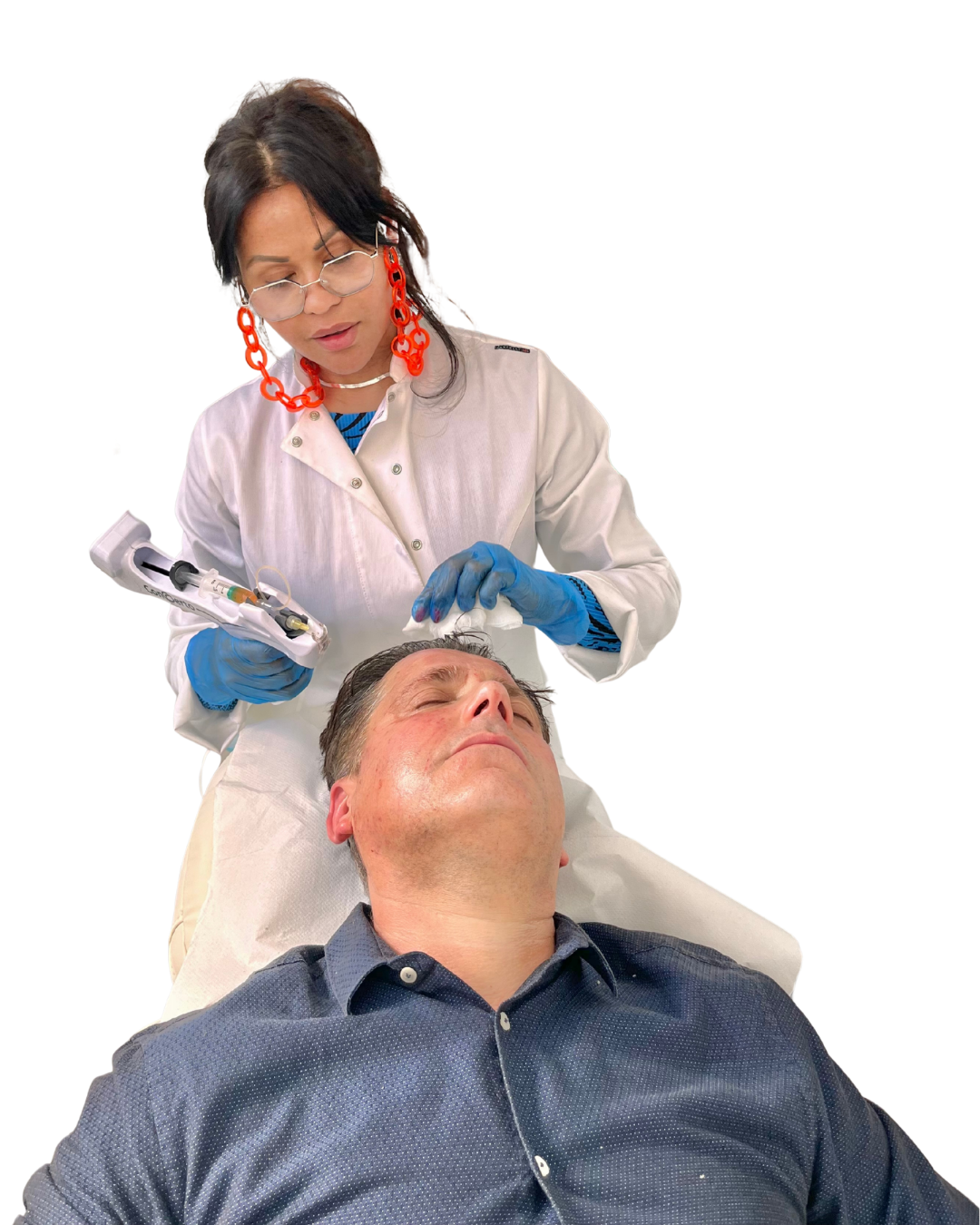
The treatment typically follows a structured process:
- A small blood sample is taken, similar to a routine blood test.
- The sample is processed using a centrifuge to separate platelet-rich plasma.
- The PRP is then carefully injected into areas of the scalp identified during assessment.
- Why does PRP require multiple sessions?
While the procedure is relatively quick, the biological processes it aims to influence are gradual. Hair growth cycles operate over months, not weeks.
For this reason, PRP is usually delivered as a course of treatments, spaced several weeks apart.
Who is PRP hair treatment suitable for?
Suitability is one of the most important and often overlooked aspects of PRP treatment.
- Hair concerns PRP may help address:
- Individuals with thinning hair but still have visible hair coverage
- Prefer to avoid surgical intervention
- Are looking for a treatment that aligns with a regenerative, biologically led approach
- Understand that improvement, if achieved, is progressive rather than immediate
- When PRP hair restoration may not be appropriate
PRP may be less appropriate for individuals with advanced hair loss where follicles are no longer active, or where underlying medical or dermatological conditions are driving shedding.
This is why a proper consultation matters. Hair loss is rarely caused by a single factor. Hormonal changes, genetics, stress, nutrition, and systemic health can all contribute.
A responsible PRP provider will take these variables into account before recommending treatment, rather than positioning PRP as a default solution.
PRP hair treatment vs traditional hair restoration or aesthetic treatments
In practice, PRP and hair transplant surgery serve different purposes.
Transplants involve relocating follicles and are typically discussed once hair loss is more advanced. PRP hair loss and scalp treatment, on the other hand, is more commonly considered when thinning is noticed earlier on.
Topical and oral medications often act on the body more broadly, which is why they’re usually described in terms of hormones or growth cycles. PRP, on the other hand, is localised, focusing on the scalp itself rather than systemic pathways.
In real terms, people approach this differently. Some combine PRP with other treatments under medical guidance, while others choose to use it on its own.
What matters is understanding that PRP hair loss and scalp treatment isn’t meant to replace every option available. It tends to be most useful when it’s used at the right time and for the right reasons.
Why choose Sutha Aesthetics?
At Sutha Aesthetics, PRP hair treatment is approached through a medical and regenerative lens, rather than as a cosmetic add-on.
Each patient journey begins with a detailed assessment. This allows the team to understand the pattern and progression of hair changes, review relevant medical history, and discuss suitability in a realistic, transparent way.
PRP is considered within the wider context of scalp health and biological response, not as an isolated procedure. Treatment plans are personalised and evidence-informed, with recommendations made conservatively and patient safety kept at the centre of decision-making.
Importantly, PRP is not positioned as a guaranteed outcome. Instead, patients are supported in understanding what the treatment may help with, where its limitations lie and how it fits into a longer-term care pathway.
That level of clarity is intentional.
PRP hair treatment in Hertfordshire & Norfolk
In Hertfordshire and Norfolk, PRP tends to come up in conversations with people who want to avoid surgery and are still early in the hair loss process.
Most often the concern isn’t just access to treatment, but whether it’s being approached carefully and for the right reasons.
In practice, howPRP hair treatment in Hertfordshireis planned and reviewed matters as much as the procedure itself.
Taking the time to assess suitability and monitor response over time helps ensure that, if chosen, treatment supports scalp health rather than simply adding another intervention.
Frequently asked questions about PRP hair treatment
- How many PRP sessions are usually recommended?
The honest answer is that it depends. PRP is rarely treated as a one-off. It’s usually planned as a short course, spaced out over several weeks, simply because hair follicles and scalp tissue need time to respond.
The number of sessions tends to vary based on the pattern of thinning, how long it has been developing, and how the scalp reacts over time.
2. When might changes in hair quality or density be noticed?
Hair growth works on a slow cycle, so PRP is generally approached as a gradual process rather than something that delivers immediate change.
Some people notice early shifts in hair texture or reduced shedding within a few months, while visible changes in density, if they occur, usually take longer.
It’s also worth saying that responses differ; not everyone experiences the same outcome.
3. Are there risks or side effects associated with PRP?
As PRP is produced from your own blood, it avoids synthetic substances and is typically well tolerated by the body.
When discussing the potential side effects of PRP hair loss and scalp treatment, clinicians focus on individual suitability and careful medical oversight.
4. Can PRP be combined with other hair loss and scalp treatments?
PRP is sometimes combined with other treatments as part of a wider plan, although this is always assessed on an individual basis.
In hair treatment, it may complement nutritional or lifestyle support rather than replace it, with sequencing guided by clinical judgement.
5. Is PRP hair treatment painful or uncomfortable?
Most people find PRP uncomfortable rather than painful, and the sensation tends to be short-lived.
For scalp treatments in particular, numbing or cooling may be used where appropriate to make the process more manageable.
Key Takeaway
PRP tends to be discussed in a fairly specific context. It’s not a cosmetic quick fix, and it isn’t treated as a guaranteed answer to hair loss. Instead, it’s usually considered when thinning is picked up early and there’s still an opportunity to support scalp and follicle health in a meaningful way.
For people in Hertfordshire and Norfolk, the most useful place to start is often the consultation rather than the treatment itself. Looking at how hair changes have developed, what else might be contributing, and what’s realistic helps place PRP where appropriate within a broader plan, rather than treating it as a standalone intervention.
If you’re exploring PRP hair treatment in Hertfordshire and would value clinically grounded, tailored guidance, book aconsultation at Sutha Aesthetic Medical Regenerative Clinic.