GLP-1 Weight Loss and Facial Ageing: What Patients Need to Know
Weight-loss injections like semaglutide, tirzepatide, Mounjaro, and the growing family of GLP-1 medications have genuinely changed lives. If you're on one, the results are likely speaking for themselves: your clothes fit differently, your energy has shifted, and you feel more like yourself again.
But here's something that doesn't get talked about nearly enough: what these weight loss injections facial ageing are doing to your face at the same time.
This isn't a scare story. It's information you deserve to have because once you understand what's happening beneath the skin, the solution becomes obvious. And the good news is that it's entirely fixable.
What Your Weight Loss Injections Are Actually Doing to Your Face
GLP-1 medications work by significantly reducing appetite and accelerating fat loss across the whole body. Clinical trials show average weight reductions of 15–17%, which is substantial, and your face feels every percentage point of it.
Your face is held in shape by a network of fat compartments: small, distinct pockets of fat sitting in your cheeks, temples, under your eyes, and along your jawline. These fat pads are what give your face its three-dimensional structure, its softness, and the youthful fullness that most of us take for granted until it's gone.
When you lose weight rapidly, as most people do on GLP-1 medications, these facial fat compartments deflate. All of them, often at once.
This is where facial volume loss after weight loss becomes most visible. The result is a face that can look hollowed, gaunt, or significantly older than it did before the weight loss began, commonly referred to as the Ozempic face.
The result is a face that can look hollowed, gaunt, or significantly older than it did before the weight loss began. The cheeks sink. The temples hollow. Shadows appear under the eyes. The jawline loses its definition.
And it is far more common than the clinics that prescribe these medications tend to warn patients about up front.
What GLP-1 Medications Really Do to Your Skin, Muscles and Collagen
The conversation around GLP-1 facial ageing goes far beyond simple fat loss. Research shows that between 20% and 40% of the weight lost with GLP-1 medications can come from lean muscle mass rather than fat.
The muscle provides the underlying structural scaffolding that keeps skin lifted and contours defined in the face. Lose that scaffolding, and the skin has nothing to hold it up.
There's also a nutritional element. These medications work by suppressing appetite, which means many are eating significantly less overall, and not always getting adequate levels of protein, vitamin C, and zinc.
These are the exact nutrients your skin needs to produce collagen and elastin. Without them, skin quality declines faster than it otherwise would, compounding the visual effects of volume loss.
The result, for many GLP-1 patients, is a face that has aged noticeably, not because of anything they've done wrong, but as a direct and predictable consequence of how these medications work.
Who Is Most at Risk of Facial Volume Loss on Weight Loss Injections
Not everyone experiences GLP-1 facial changes to the same degree. A few factors make a meaningful difference.
Age plays the biggest role. If you're 40 or above, your skin already has less collagen and less elasticity than it did a decade ago. Rapid volume loss on top of that existing baseline is felt much more acutely; the skin simply doesn't have the resilience to adapt and redrape the way younger skin can.
The amount and speed of your weight loss matters too. The more you lose, and the faster you lose it, the more pronounced the facial impact tends to be. Patients who lose more than 15% of their body weight are at the highest risk for visible facial hollowing.
Lifestyle factors add up. Years of sun exposure reduce skin elasticity. Smoking accelerates collagen breakdown. If either of those applies, the effects of GLP-1 facial ageing can be more pronounced and more visible.
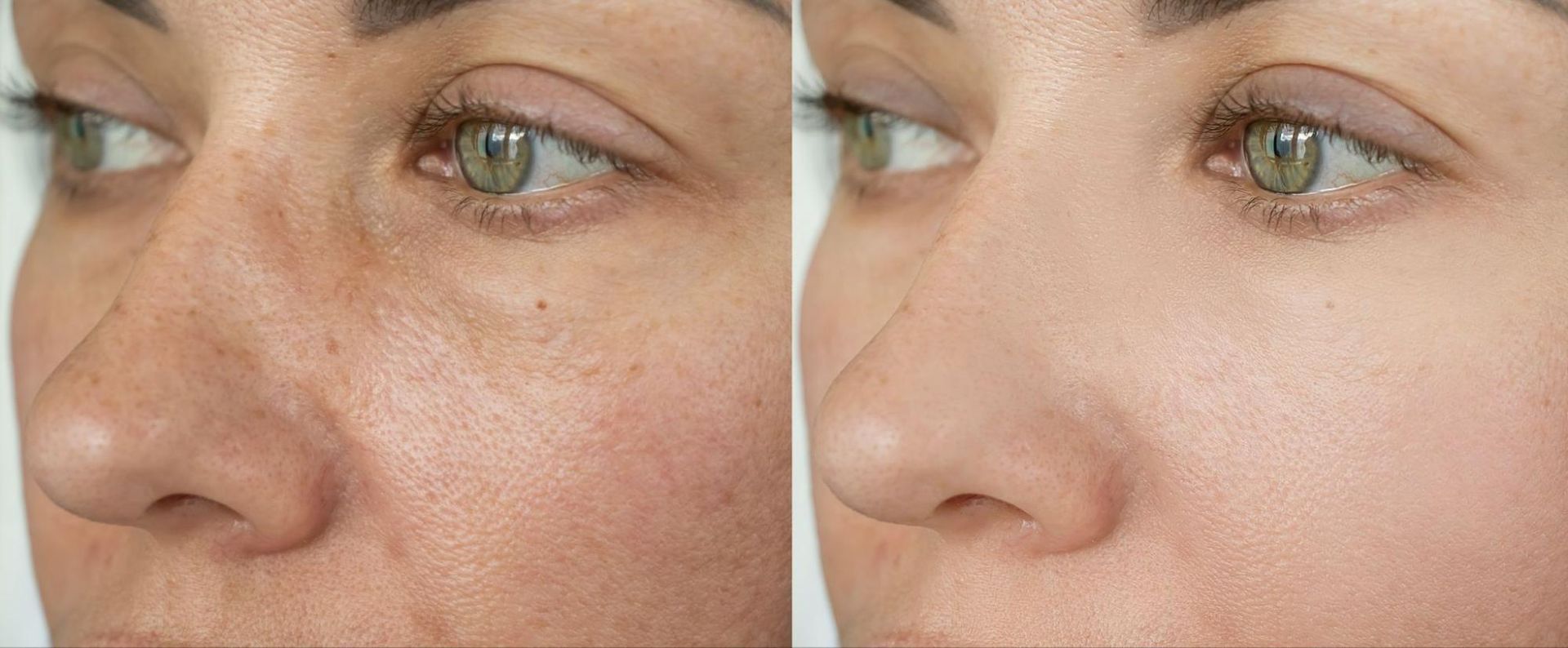
The right treatments can restore facial volume loss after weight loss injections naturally
The Good News: This Is Exactly What Aesthetic Medicine Is For
Here's the reframe that matters: the treatments that address GLP-1 facial changes are not extreme, surgical, or experimental. They are established, proven aesthetic treatments, the same ones that have been restoring facial volume and improving skin quality for years.
In fact, this is exactly where non-surgical facial rejuvenation after weight loss plays a crucial role. These treatments are designed to restore balance, support skin quality, and rebuild structure without altering your natural features.
They just need to be applied thoughtfully, with an understanding of how GLP-1 medications specifically affect the face.
At Sutha Aesthetics, the approach is always the same: assess the whole face first, understand what has changed and where, and then build a staged treatment plan that restores what's been lost in a way that looks completely natural.
The goal is never to make you look "done." It's to make you look like yourself again.
Biostimulation: The Foundation of Our Approach
For GLP-1 patients, biostimulation is where we start. Rather than replacing what's been lost from the outside, biostimulators work by activating the skin's own regenerative processes.
This stimulates the production of collagen types I and III, restoring elasticity and rebuilding the structural foundation that rapid weight loss has depleted.
Sculptra (poly-L-lactic acid) is one of the most established and effective biostimulators available. It works by triggering a natural collagen-building response beneath the skin, producing a gradual, progressive improvement in facial fullness and firmness over several months.
Because GLP-1 medications directly affect collagen synthesis, not just fat volume, Sculptra treatment addresses the problem at a biological level rather than at a surface level. Results are subtle, natural, and long-lasting.
Alongside Sculptra, other regenerative treatments, including polynucleotides (PDRN) and advanced skin boosters, can further improve skin quality, hydration, and resilience. These treatments work at a cellular level to restore what GLP-1 medications have depleted: the building blocks the skin needs to look and function at its best.
Skin Tightening: Restoring Lift and Tone
Volume loss is one half of the GLP-1 facial picture. The other half is skin laxity, the slight looseness along the jawline and mid-face that occurs when the skin doesn't have time to contract in response to rapid fat loss.
This results in a slight looseness along the jawline and a change in the way shadows fall across the face.
At Sutha Aesthetics, we offer two skin-tightening options. EMFACE skin tightening treatment combines radiofrequency energy with facial muscle stimulation (HIFES) to tighten skin and rebuild the facial muscles that weight loss has weakened, two core drivers of GLP-1 facial ageing addressed in one needle-free, zero-downtime treatment.
For patients with more significant laxity, a
Thread Lift uses dissolvable threads to physically lift and reposition tissue while stimulating collagen, delivering immediate results that continue to improve over time.
Dermal Fillers: A Later-Stage Option
For some patients, once the skin-regenerative foundation has been established, dermal fillers may be considered a later-stage option to address any remaining areas of volume loss. Your practitioner will advise whether this is appropriate as part of your individual treatment plan.
Frequently Asked Questions
Do I need to wait until I've finished losing weight before having treatment?
Not necessarily. Many patients choose to begin a staged treatment programme while still actively losing weight. We'll advise on timing based on your individual rate of loss and the specific changes we're seeing in your face.
Will the results look natural on Ozempic face?
Yes, when treatment is carried out with a thorough facial assessment and a staged approach, the aim is always a result that looks proportionate and natural. The goal is to restore what has changed, not to add something new.
Can I have more than one treatment at the same time?
Yes. For many GLP-1 patients, a combination approach —biostimulation alongside skin tightening—produces the most complete result. We'll recommend the right Ozempic face treatment combination based on your individual facial assessment.
How soon will I see results?
Biostimulator results develop gradually over the months as collagen is rebuilt. Skin tightening results typically appear over six to twelve weeks as collagen remodelling takes effect.
The progression is intentional as the results that build over time look and feel more natural.
Is there any downtime?
Minimal. Most patients return to normal activities the same day or the following day after filler and skin-tightening treatments. Sculptra is similarly low-downtime. Your practitioner will advise you on what to expect after each session.
To Sum Up
If you’ve noticed changes in your face following weight loss, you’re not alone, and there are thoughtful, non-surgical ways to address them.
A personalised consultation can help you explore what’s right for you, with a focus on natural, balanced results. You've done the hard part. The injections have worked. Now let's make sure your face reflects everything you've achieved.
Book a facial consultation at Sutha Aesthetic Medical Regenerative Clinic to receive personalised advice in a discreet, medically led setting.